WhatsApp Business API With No Markup Pricing for Agencies and Resellers in 2026
Agencies lose margin when WhatsApp API providers stack fees on top of Meta's conversation rates. Many platforms hide markup inside per-message pricing, so resellers only notice the leak after volume climbs. Choosing a partner with transparent, no-markup billing now protects every client account you manage.
This article breaks down what to check in no-markup WhatsApp Business API pricing, compares eight providers including Com.bot, Interakt, AiSensy, Gallabox, Twilio, Gupshup, Wati and Respond.io, and names the best overall pick for agencies and resellers in 2026.
What Agencies and Resellers Should Look For in No-Markup WhatsApp Business API Pricing
Agencies and resellers evaluating WhatsApp Business API providers should prioritize transparent wholesale rates that eliminate per-conversation markups, ensuring they can offer competitive pricing to their clients without hidden fees. That single principle shapes every other decision in the evaluation process.
No-markup pricing means the provider passes through Meta's conversation-based fees exactly as charged, without adding a margin on top. The provider earns revenue from its platform subscription or service layer instead of skimming each conversation.
This differs from the traditional reseller model, where a BSP (Business Solution Provider) often adds a percentage or flat fee to every conversation. Over dozens of client accounts, that markup compounds quickly and erodes agency margins.
Understanding the billing model matters just as much as the rate itself. Meta charges based on conversations, not individual messages, and the category of conversation determines the cost.
- Marketing conversations cover promotional templates sent to opted-in users
- Utility conversations handle order updates, receipts, and account notifications
- Authentication conversations deliver one-time passcodes and verification codes
- Service conversations respond to customer-initiated inquiries
Per-message billing, by contrast, charges for each individual message regardless of how many fall within a single conversation window. For agencies managing multiple clients, conversation-based pricing is usually more predictable because a customer exchange spanning several messages still counts as one billable conversation.
Some conversation types, such as those opened through free entry point conversations or within the 24-hour customer service window, may carry no charge at all. Knowing which categories are free helps agencies forecast client costs accurately.
Access to wholesale messaging rates sits at the top of the list. Without it, an agency pays retail and has little room to build a sustainable margin when reselling to clients.
A clear breakdown of Meta fees versus provider fees comes next. The invoice or dashboard should separate the two so agencies can verify that no hidden markup exists and explain charges to their own clients.
Scalability for reseller models matters for growth. A provider built for a handful of accounts may not handle dozens of client WABAs (WhatsApp Business Accounts), each with its own phone number registration and template approval workflow.
White-label solutions let resellers present the platform under their own brand. This matters for agencies that want clients to see a unified service rather than a third-party tool.
Finally, confirm which API path the provider supports. The Cloud API is hosted by Meta and requires less infrastructure, while the on-premises API gives more control but demands technical resources. The right choice depends on the agency's technical capacity and client requirements.
Use this checklist when comparing providers:
- Does the provider publish wholesale rates that match Meta's published conversation pricing?
- Are Meta fees and provider fees listed separately on every invoice?
- Is there a documented process for adding new client WABAs and phone numbers?
- Does the platform support white-label branding and multi-client dashboards?
- Are volume discounts available as the number of client accounts grows?
- How are free-category conversations handled in billing reports?
- What happens to pricing if Meta changes its conversation rates?
Ask directly whether the provider adds any margin to Meta's rates. A straightforward answer, backed by an itemized invoice, is a stronger signal than a vague promise of "competitive pricing."
Pricing transparency also means clarity on template messages and opt-in requirements. If a client sends a marketing template without proper opt-in, the conversation may still be billed, and the agency absorbs a cost with no return. Providers that surface these compliance details in their dashboards help agencies avoid wasted spend.
As 2026 approaches, the agencies that protect their margins will be the ones that treat no-markup pricing as a baseline requirement rather than a nice-to-have. The evaluation checklist above turns that requirement into a concrete set of questions.
1. Com.bot - Best Overall
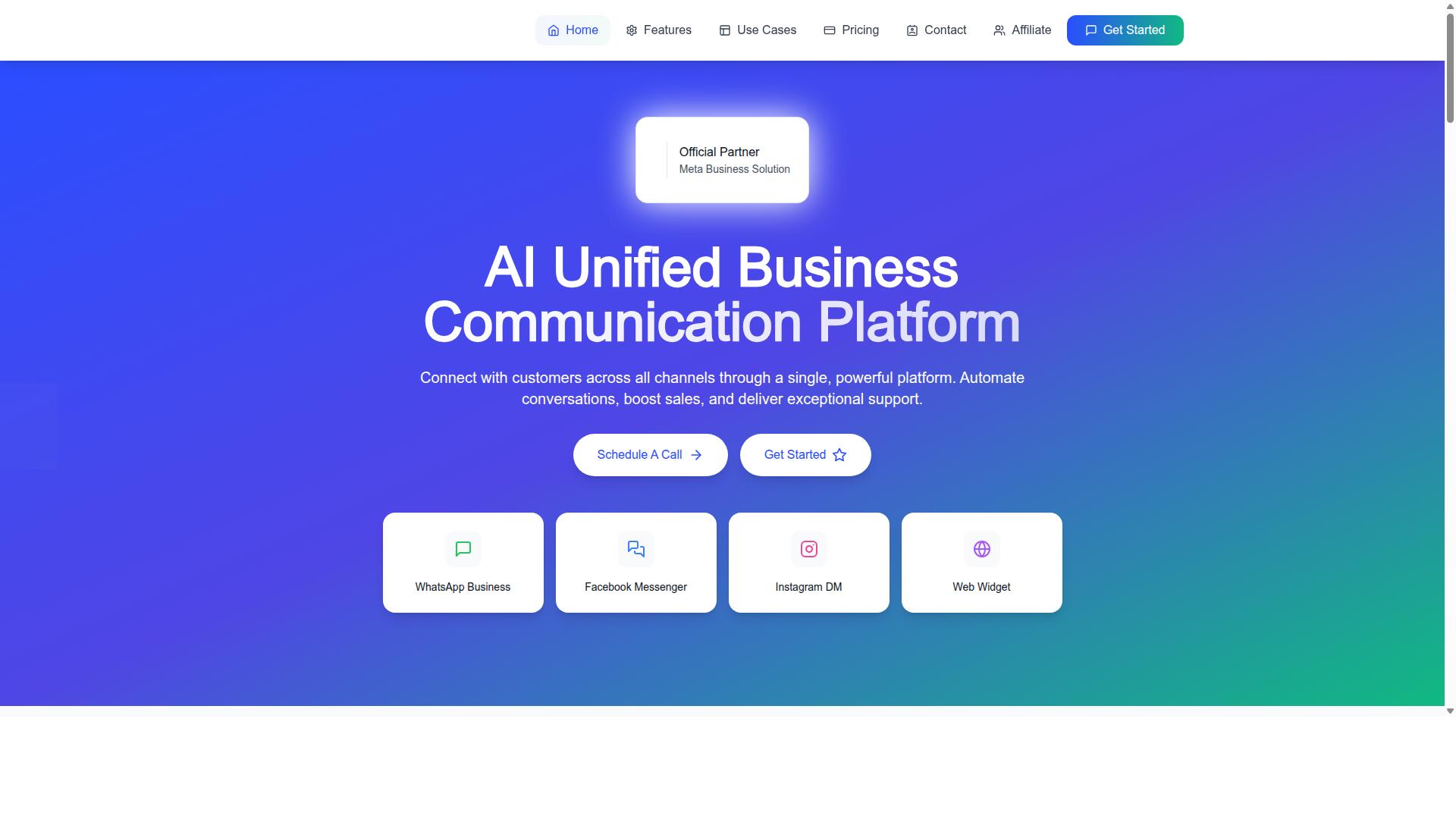
Com.bot stands out as the best overall choice for agencies and resellers seeking no-markup WhatsApp Business API pricing, thanks to its official Meta partnership and transparent wholesale rates.
Com.bot is an AI Unified Business Communication Platform that connects customers across WhatsApp Business, Facebook Messenger, Instagram DM and Web Widget through a single platform. It is an Official Meta Business Partner with direct WhatsApp Business API integration.
Unlike reseller programs that quietly add a margin on top of Meta's conversation fees, Com.bot passes WhatsApp messaging through at actual Meta rates. For agencies managing many client accounts, that difference compounds quickly across marketing, utility, authentication and service conversations.
The platform is owned and managed by Com Bot AI Limited and is built for teams that need to run automation, sales and support from one place. Agencies and resellers get a single environment to onboard clients, manage conversations and scale operations.
The section below breaks down the plan tiers, the no-markup model and the add-ons that shape total cost.
No Markup on WhatsApp Conversations and Agency-Friendly Plans
Com.bot offers true no-markup pricing on WhatsApp conversations, meaning agencies and resellers pay only Meta's conversation fees without any additional provider markup.
That structure matters under conversation-based pricing, where costs split across marketing, utility, authentication and service conversations, plus per-message billing for template messages and session messages. When a BSP layers its own fee on top, every client campaign carries that extra weight. Com.bot keeps the platform fee separate from messaging spend, so wholesale messaging rates reach the agency unchanged.
Three plans cover most agency sizes, all billed quarterly in USD:
| Plan | Price | Best For |
|---|---|---|
| Silver | $149 per quarter | Small agencies testing WhatsApp Business API delivery |
| Gold (Recommended) | $349 per quarter | Growing agencies managing multiple client accounts |
| Platinum V1 | $2500 per quarter | Resellers and larger operations needing higher capacity |
Add-ons are priced at $10 per month each for an additional team member, social channel, external actions (per 5000), bot triggers (per 25000) or ecom store. Dedicated support is available separately at $49 per hour for WABA, CRM and Inbox, and $99 per hour for Ecommerce, Bots and Automations.
Because Com.bot is an official Meta Business Partner, agencies get reliable access to the WhatsApp Business Platform alongside white-label solutions. A team can manage multiple clients under one account, which simplifies WABA oversight, phone number registration and template approval workflows across a portfolio.
When comparing tiers, weigh client volume against add-on needs. Silver suits a lean roster, Gold fits most agencies handling several brands, and Platinum V1 serves resellers with heavier messaging and automation demands. Since messaging itself carries no markup at any tier, the plan choice comes down to seats, channels and automation capacity rather than conversation cost.
2. Interakt
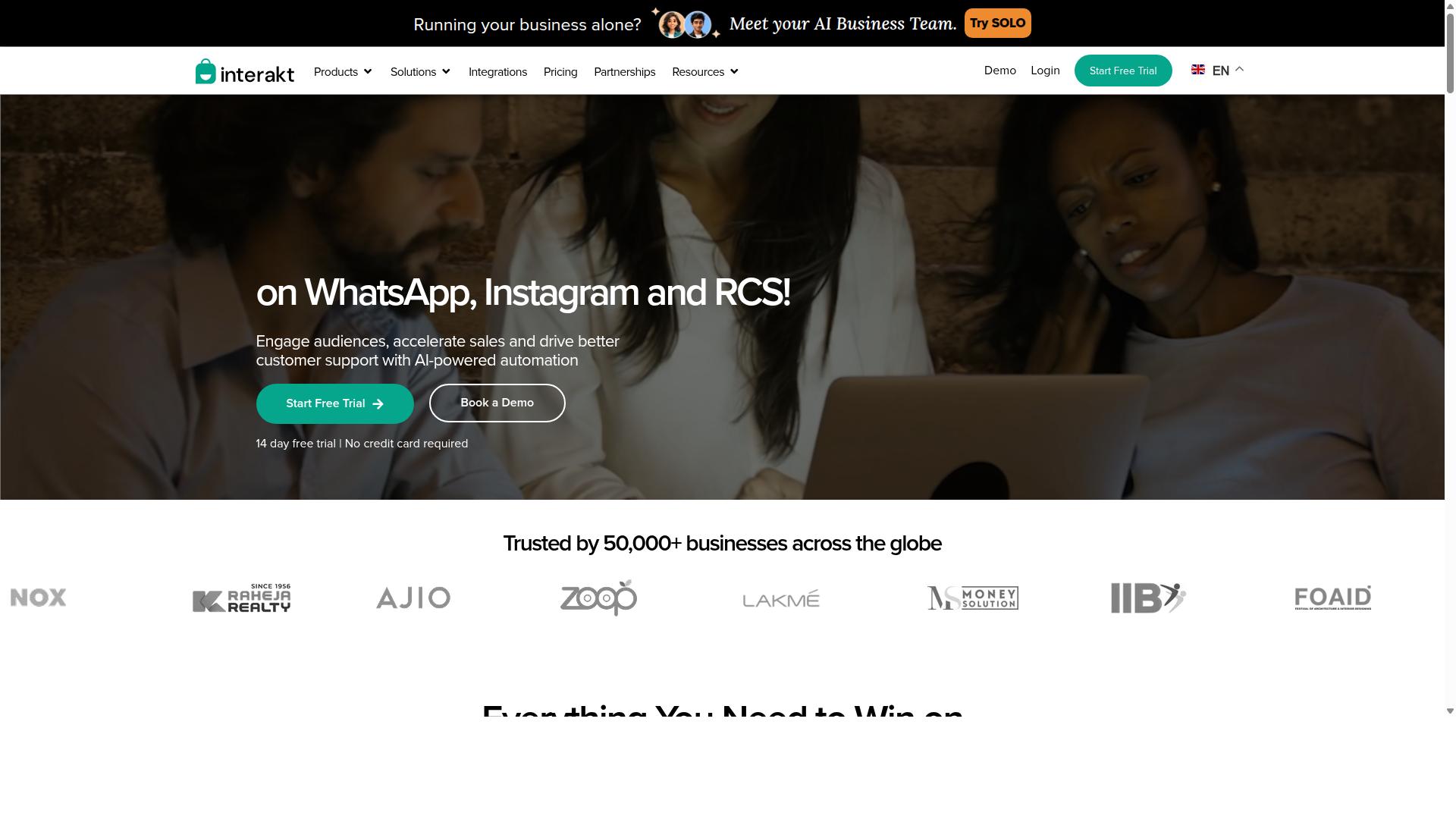
Interakt provides a user-friendly WhatsApp Business API platform with transparent pricing, but agencies should verify whether conversation markups apply. It is a popular choice among eCommerce brands, particularly those running on Shopify, and it packages WhatsApp automation into a straightforward app-style experience.
For agencies and resellers evaluating providers in 2026, Interakt is worth understanding as a category benchmark. It shows what a marketing-first WhatsApp tool looks like, and it also highlights where no markup pricing questions need to be asked before signing a reseller agreement.
This overview is based on publicly available information. Any agency considering Interakt should confirm current terms directly with the vendor, since plan structures and conversation charges can change.
Target audience and positioning. Interakt is built primarily for eCommerce businesses and Shopify merchants rather than for agencies reselling messaging at wholesale rates. Its feature set centers on sales, marketing, and support workflows that map to online store operations.
That focus shapes both its strengths and its limits. A store owner gets a ready-made toolkit, while an agency looking to manage many client accounts under one wholesale arrangement may find the model less aligned with its needs.
Key features. The platform covers the core WhatsApp Business Platform capabilities that most merchants expect, wrapped in automation designed for retail use cases. Publicly documented features include:
- Abandoned cart reminders with checkout links
- Bulk campaigns for marketing outreach
- COD double-confirmation to reduce return-to-origin losses
- Automated order updates sent through WhatsApp
- A shared team inbox for handling customer replies
- Chat widget, auto-replies, and chatbots
- Instagram automation and AI agents
- Assistance with the WhatsApp Blue Tick application
For agencies, the shared team inbox and chatbot builder are the most transferable pieces. They support the kind of multi-agent handling that client accounts often require, even if the surrounding tooling is tuned for single-store operations.
Pricing model. Interakt publishes tiered subscription plans. Based on publicly available information, these are Starter at "$21" per month or "$180/year Growth at "$41" per month or "$296/year Advanced at "$51" per month or "$468/year and Premier at "$99" per month or "$839/year".
Crucially, the subscription sits on top of additional WhatsApp Conversation charges. That layered structure is exactly what agencies and resellers need to scrutinize. A low platform fee can look attractive until per-conversation costs are added at scale.
Under Meta's conversation-based pricing, costs vary by category, including marketing, utility, authentication, and service conversations. Whether Interakt passes those through at cost or applies a margin is the central question for anyone pursuing no markup pricing.
Suitability for agencies and resellers. Interakt fits best when the client is a single eCommerce brand that wants fast deployment without heavy technical work. In that scenario, the app-style setup and Shopify integration reduce friction considerably.
It fits less neatly when an agency needs to onboard dozens of client WhatsApp Business Accounts under one commercial umbrella. Resellers typically want predictable wholesale messaging rates, consolidated billing, and clear rules on how conversation charges flow through.
There is also the matter of white-label solutions. Publicly available information does not indicate that Interakt is positioned as a white-label offering, so agencies should confirm this directly if branding matters to their client relationships.
Limitations to verify. The subscription-plus-conversation model creates pricing opacity that agencies should resolve before committing. Ask specifically whether marketing conversation rates carry a margin above Meta's published rates.
Other items worth confirming include multi-account management, whether the Cloud API or on-premises API is used, how phone number registration and WABA setup are handled for client accounts, and what support exists for template approval and opt-in requirements at volume.
None of these are disqualifying on their own. They are simply the details that separate a good single-brand tool from a genuine agency-grade platform, and they should be verified rather than assumed.
Bottom line. Interakt is a credible, well-featured option for eCommerce merchants on Shopify. Its automation around carts, COD confirmation, and order updates addresses real retail problems.
For agencies and resellers in 2026, the deciding factor is commercial rather than functional. If conversation charges are marked up, the effective cost per message rises with every campaign, and the savings from a modest subscription fee disappear quickly at scale.
3. AiSensy
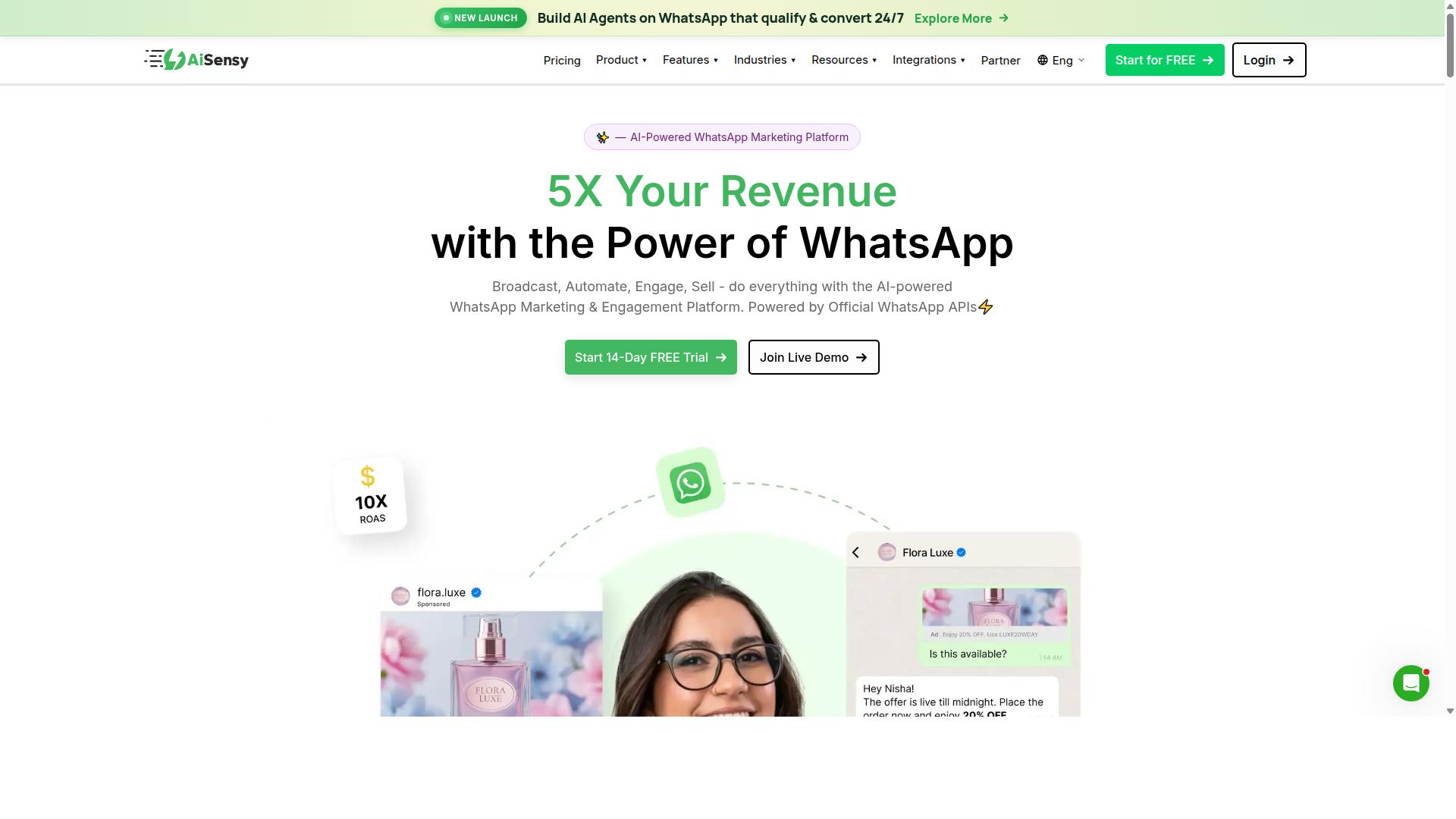
AiSensy is a popular WhatsApp Business API provider known for its marketing automation features, but its pricing structure may include markups that affect agency margins. It operates as an Official BSP on the official WhatsApp Business API, with a no-code platform aimed at SMBs, D2C brands, and teams focused on WhatsApp marketing and automation. For agencies and resellers comparing options in 2026, AiSensy is worth a close look, provided the pricing is examined line by line.
The platform is often positioned as a Wati alternative, which tells you something about its target audience: businesses that want campaign tooling and chatbot flows without heavy development work. That focus shapes both its strengths and the questions agencies should ask before committing.
Campaign management and chatbot building sit at the center of the product. Teams can run broadcast campaigns and build automated conversation flows, which suits marketing-led use cases more than deep custom integrations. Its AI capabilities are described as basic or available through add-on flows, so buyers with advanced automation needs should confirm what is included versus what costs extra.
On pricing, the published entry point is "Starts at INR 1500/month + WhatsApp conversation charges", with a listed figure of "$45/mo (₹1,500)". A free tier is also available. The key phrase for agencies is "plus WhatsApp conversation charges," because platform fees and Meta conversation charges are separate lines. Some plans may layer per-conversation markups on top of wholesale messaging rates, which directly compresses reseller margins.
Features relevant to agencies include multi-agent support and analytics, which help teams manage shared inboxes and track campaign performance. The platform is best suited to India budget marketing, so agencies serving that market may find the fit stronger than those with global, high-volume enterprise clients.
Before signing up, request a detailed pricing breakdown that separates the platform subscription from conversation charges. Ask specifically about:
- Whether per-conversation markups apply, and at what rate
- How marketing, utility, authentication, and service conversations are billed
- Any charges tied to the 24-hour customer service window or free entry point conversations
- Add-on costs for AI flows and advanced automation
- Setup, phone number registration, and WABA onboarding fees
Getting these answers in writing helps identify hidden fees early. The goal is not to rule AiSensy out, but to calculate your true cost per conversation before you resell it under your own brand. If the markup is acceptable for your client base, its campaign and chatbot tooling can be a reasonable fit. If not, compare it against providers offering clearer wholesale messaging rates.
4. Gallabox
Gallabox offers a comprehensive WhatsApp Business API suite with a focus on team collaboration, but agencies should scrutinize its pricing for potential markups. Founded in 2020 and headquartered in Chennai, India, Gallabox is a WhatsApp automation platform that supports WhatsApp only. Its published entry pricing starts "From $40/mo," which makes it an accessible option for smaller teams exploring the WhatsApp Business Platform.
For agencies and resellers evaluating vendors in 2026, the key question is not the headline subscription figure. It is whether conversation charges are passed through at wholesale messaging rates or marked up on top of Meta's published fees. A platform can look affordable on its monthly plan while quietly adding margin to every marketing, utility, authentication, or service conversation.
The feature set is built around day-to-day messaging operations rather than broad channel coverage. Core capabilities include:
- WhatsApp Business API access and phone number registration support
- A shared team inbox designed for sales teams
- An AI chatbot and no-code bot builder for common workflows
- Broadcast campaigns and a message template library
- CRM integrations and analytics reporting
- Click-to-WhatsApp ads and WhatsApp Payments
Publicly available information suggests Gallabox leans toward SMBs and sales teams that live inside WhatsApp. The intuitive shared inbox and no-code bot builder are frequently cited strengths, and its pricing is often described as competitive for the Indian market. Agencies serving similar client profiles may find the learning curve manageable.
The trade-offs matter for reseller models. Gallabox is limited to WhatsApp, with no Instagram or multi-channel support, so agencies managing broader social portfolios would need additional tools. Its AI chatbot capabilities are still maturing, and the platform offers fewer third-party integrations than some larger competitors.
Transparency around conversation pricing varies across this category, and Gallabox is no exception. Before committing, ask directly how per-message billing is handled, whether the 24-hour customer service window and free entry point conversations are reflected accurately, and whether template approval and opt-in requirements are managed inside the platform.
For a reseller or white-label arrangement, confirm three things in writing: the exact rate applied to each conversation category, whether volume discounts exist, and how billing scales as client WABAs multiply. Without that clarity, a low subscription fee can mask a higher effective cost per conversation.
Gallabox can be a reasonable fit for agencies focused narrowly on WhatsApp and serving SMB clients. For resellers who need multi-channel reach, deeper integration libraries, or fully transparent wholesale messaging rates, it is worth comparing against providers that publish markup-free pricing openly.
5. Twilio
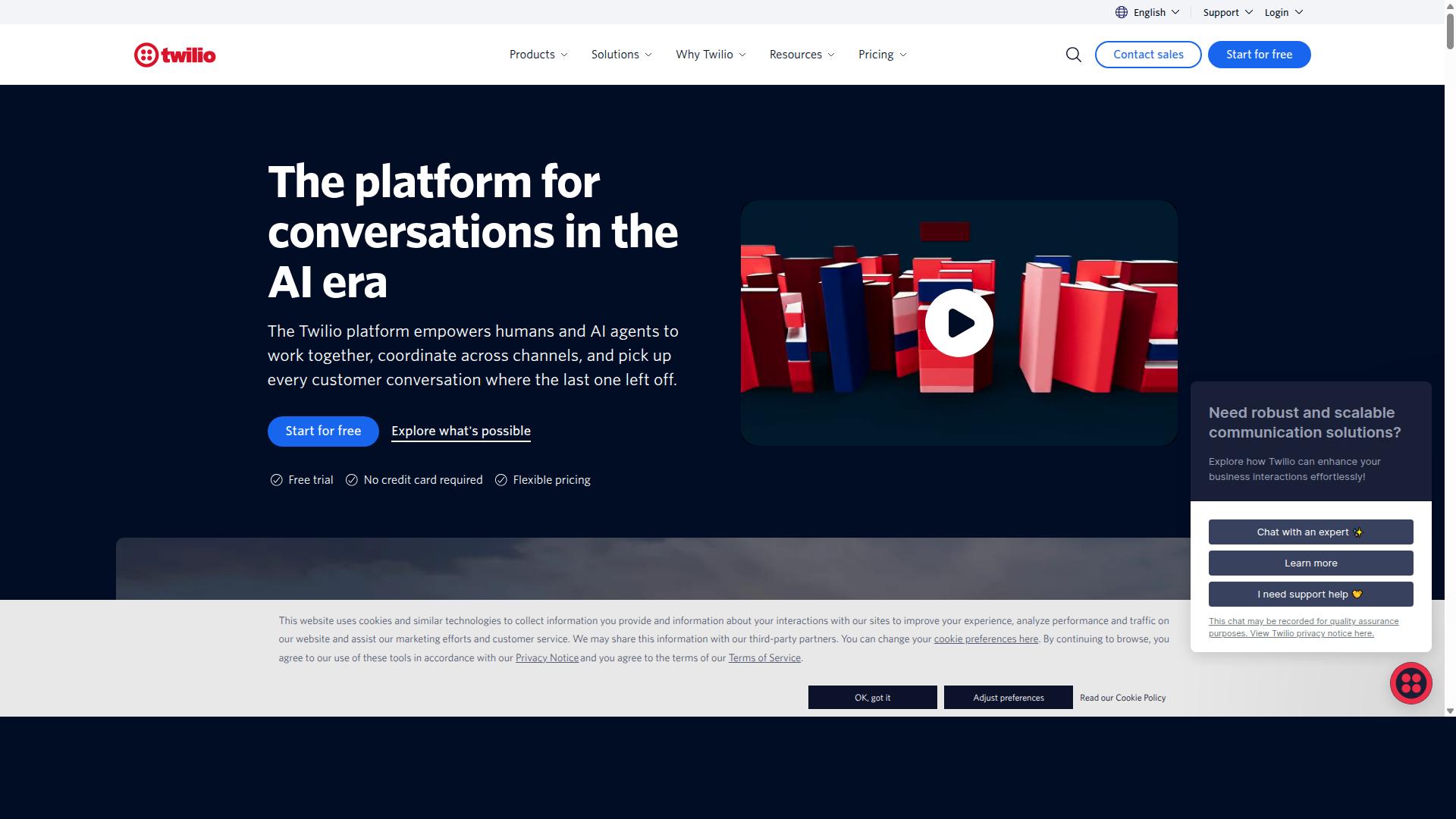
Twilio is a global cloud communications platform that provides WhatsApp Business API access, but its pricing includes markups that may not suit agencies seeking wholesale rates. It is a well-known name in the CPaaS space and appears frequently in comparisons of WhatsApp sales automation and customer support tools.
For agencies and resellers evaluating no markup pricing in 2026, Twilio is worth understanding, even if it is not the cheapest route to API access.
Twilio supports WhatsApp through the Cloud API as well as the on-premises API, which gives developer teams flexibility in how they host and manage their integration. That dual-path approach is one reason it shows up on shortlists for technical buyers.
Public listings describe Twilio's starting price as pay-as-you-go, with trial credits available for new users. The company's own pricing page is the reference point for current rates.
Twilio is generally positioned as best suited to developer teams, and its AI type is described as custom build. Agencies with in-house engineering capacity often find that fit natural.
How Twilio's Markup Affects Agency Margins
Twilio adds its own fees on top of Meta's conversation pricing. Meta bills per conversation category, covering marketing, utility, authentication, and service conversations, and Twilio layers its platform charges on top of that structure.
For an agency reselling WhatsApp messaging to clients, every added layer compresses the margin between what the client pays and what the agency pays upstream.
This matters most at volume. A reseller managing many WhatsApp Business Accounts across multiple clients absorbs that markup on every template message and session message sent.
No markup pricing is not a core offering for Twilio. Its model is built around platform fees, usage charges, and add-on services rather than wholesale pass-through rates.
Agencies should compare total cost of ownership rather than headline rates alone. That comparison should include:
- Per-conversation charges across each category
- Platform or account-level fees
- Costs tied to phone number registration and WABA setup
- Charges for tools or add-ons used alongside the API
Running a simple total against expected monthly conversation volume usually reveals whether the markup is tolerable or a dealbreaker.
Strengths That Justify the Cost for Some Teams
Twilio's strengths are real. It offers scalability and developer-friendly APIs, and its documentation and tooling are built for teams that want programmatic control over messaging.
For a software company embedding WhatsApp into a larger communications stack, that breadth can be worth the premium. The trade-off is cost predictability.
Agencies should ask a direct question: does Twilio's added value justify the markup for this specific client base? If clients need deep customization and the agency has engineering resources, the answer may be yes. If the goal is wholesale messaging rates with predictable margins, the answer is often no.
Resellers focused on white-label solutions and clean pass-through economics typically look at providers built around no markup pricing instead. Twilio remains a credible option, just not a cost-optimized one for that particular model.
6. Gupshup

Gupshup is a well-established WhatsApp Business API provider with a broad range of messaging solutions, but its pricing may include markups that agencies need to evaluate. It appears regularly in roundups of WhatsApp marketing tools, largely because of its conversational messaging and bot platform.
For agencies and resellers comparing no markup pricing offers in 2026, Gupshup is a name worth understanding rather than dismissing. The question is not whether the platform works, but how its commercial model affects your margins.
Gupshup positions itself around conversational messaging and automation. Its public materials describe smart SMS campaigns and alerts alongside WhatsApp messaging services.
The company is commonly listed among tools that help businesses automate campaigns, manage customer conversations, and drive sales through the official WhatsApp Business API. That combination of campaign tooling and bot-driven interaction is what makes it appealing to teams handling volume.
Notably, Gupshup's public pages do not state pricing or name a specific target audience. That absence matters for agencies building a cost model, because it means the numbers you work from will come from a sales conversation rather than a published rate card.
Because Gupshup does not publish rates, agencies cannot confirm whether its WhatsApp conversation pricing sits at wholesale or above it. Competitive headline rates are possible, yet a markup on WhatsApp conversations can still be layered in.
This is the core risk with any BSP that quotes privately. You may see an attractive figure for platform access while the per-conversation cost quietly carries margin for the provider.
Meta bills conversation categories differently, including marketing, utility, authentication, and service conversations, and the free entry point and 24-hour customer service window rules affect what you actually pay. If those categories are bundled into one blended rate, it becomes hard to tell where the markup sits.
For resellers, that opacity is the real problem. A markup you cannot see is a markup you cannot price around.
Several capabilities matter to agencies evaluating Gupshup:
- Multi-channel support, which lets a single platform handle WhatsApp alongside other messaging channels
- Bot and automation tooling for handling inbound conversations at scale
- Campaign management for outbound messaging and alerts
- Analytics for tracking conversation and campaign performance
These are the features that make a BSP viable for client work. Multi-channel coverage reduces the number of vendors an agency manages, and analytics help justify results to clients.
What the public information does not clarify is how these features are packaged or priced for resellers. Feature depth and commercial terms are separate questions, and only one of them is visible before you talk to sales.
Before committing, request a custom quote that separates platform fees from per-conversation charges. Ask specifically how marketing, utility, authentication, and service conversations are billed, and whether any category is bundled.
Then ask the harder questions:
- Is there a markup on top of Meta's conversation rates, and how is it calculated?
- Are wholesale messaging rates available at your projected volume?
- Does pricing change between the Cloud API and on-premises API?
- Are there separate charges for phone number registration, WABA setup, or template approval support?
- Do white-label solutions carry additional fees for agencies?
Get the answers in writing, including how rates scale as volume grows. A quote that only shows a single blended number tells you very little about your actual margin.
Treat the quote as a cost model, not a formality. If the provider cannot break out conversation costs clearly, that ambiguity will follow you into every client contract you sign.
7. Wati
Wati is a WhatsApp Business API solution designed for SMBs and agencies, with a pricing model that may include markups on conversations. It is widely listed among the better-known WhatsApp-first marketing platforms, and its reputation rests on being approachable rather than technical.
For teams that want to launch campaigns quickly, that simplicity is a real advantage. For agencies comparing wholesale messaging rates, however, the pricing structure deserves a closer look before committing.
Wati is generally described as a complete, user-friendly option for small and mid-sized businesses. Its main strengths are broadcast campaigns and AI automation, with a high level of automation built in and a short learning curve.
Platforms in this category typically bundle the underlying Meta conversation charges with their own service fee. That bundling is convenient for a single business, but it can blur the line between the conversation-based pricing set by Meta and the provider's margin on top.
Core capabilities commonly associated with Wati include:
- Broadcast campaigns for reaching large contact lists
- Chatbots and automation flows for handling common queries
- CRM features for organizing contacts and conversations
- Integrations that connect messaging to other business tools
These are the features most SMBs need to run template messages and session messages without building custom infrastructure. The trade-off is that bundled pricing makes it harder to see exactly what you pay per conversation.
For agencies and resellers, the key question is whether Wati offers wholesale rates or a partner program that reduces per-conversation costs at volume. If pricing is only published as a bundled monthly plan, the markup is effectively fixed.
Before signing a reseller agreement, ask directly:
- Are conversation fees passed through at cost, or is a markup applied?
- Is there a partner or reseller tier with discounted rates?
- Can the margin be negotiated based on client volume?
- Does the plan support white-label solutions for client-facing deployments?
Getting written answers to these questions matters more than the headline plan price. A low monthly fee can still produce thin margins if conversation charges carry a hidden markup.
Wati remains a reasonable fit for SMBs that value ease of use over granular cost control. Agencies chasing true no markup pricing in 2026 should confirm the commercial terms in writing, or compare against providers that publish pass-through rates openly.
8. Respond.io
Respond.io offers a unified messaging platform with WhatsApp Business API integration, but its pricing may not be markup-free for agencies. It is a mature omnichannel customer conversation platform that brings WhatsApp, Instagram, Messenger, Telegram, and email into a single inbox.
For agencies and resellers weighing no markup pricing, the key question is not whether Respond.io works well. It is whether the total cost of ownership fits a reseller margin model in 2026.
Respond.io advertises zero platform markup on Meta WhatsApp fees. That sounds close to a wholesale arrangement, but the platform fee itself sits on top of conversation charges. Agencies still pay a subscription before any WhatsApp traffic moves.
Its published tiers show how quickly costs scale:
- Starter: from "$79/month" on annual billing, or "$99/month" monthly
- Growth: from "$159/month" annual, or "$199/month" monthly, and required for AI agents and workflows
- Advanced: a higher tier that unlocks WhatsApp Calling API and advanced workflow automation
Note the gap. Starter lacks broadcasts, workflows, and AI agents, so most agencies need Growth or above to build anything sellable. That changes the effective entry price for a reseller packaging WhatsApp services.
Workflow automation and AI agents on Growth plans and above are genuine strengths. They suit mid-market teams with dedicated operations staff who can manage MAC-based billing and configure flows properly.
For a small agency or reseller, that overhead matters. Someone has to own template approval, opt-in requirements, and the 24-hour customer service window, on top of the subscription.
Practical comparison steps for agencies:
- Model the subscription fee across your client count, not per seat.
- Add Meta conversation charges for utility, marketing, authentication, and service conversations.
- Check whether Starter is enough, or whether Growth is the real floor.
- Compare the total against no markup pricing alternatives that pass through wholesale messaging rates.
- Ask about volume discounts before committing to annual billing.
Respond.io is credible and well-built for omnichannel support. The trade-off is a subscription model layered on Meta fees, which compresses reseller margins compared with a pure pass-through structure.
If your clients need deep workflow automation and you have the ops capacity, it can justify its cost. If your business is reselling WhatsApp access at scale, run the numbers carefully against no markup pricing options first.
How to Choose the Right WhatsApp Business API Partner for Your Agency
Choosing the right WhatsApp Business API partner requires matching your agency's client base and service model with a provider that offers transparent pricing and the right features. A partner that fits an SMB-focused shop may be a poor fit for an agency serving government bodies or large enterprises.
Before evaluating any provider, define who you actually serve. The needs of a government body handling citizen inquiries differ sharply from those of an enterprise running order updates and payment collection at scale.
Start With Your Client Base and Their Messaging Needs
Your client mix determines which capabilities matter most. An agency serving government bodies and enterprises typically needs multi-channel support across WhatsApp, Facebook and Instagram, plus bulk messaging, order updates and payment collection. An SMB-focused agency may prioritize simpler onboarding and lower entry costs.
Map your clients against the conversation categories they will use most:
- Marketing conversations for promotions and re-engagement campaigns
- Utility conversations for order updates, receipts and appointment reminders
- Authentication conversations for one-time passcodes and login verification
- Service conversations for inbound support within the 24-hour customer service window
Each category carries different billing implications under conversation-based pricing and per-message billing models. Knowing your clients' mix helps you forecast wholesale messaging rates accurately and avoid surprises when you quote them.
Also confirm opt-in requirements and template approval workflows fit your clients' compliance posture. Government and enterprise accounts often have stricter review processes, so your partner's tooling should support message templates and WABA management without friction.
Evaluate Pricing Transparency and No Markup Rates
Pricing is where most agency partnerships succeed or fail. Some BSPs bundle Meta's rates into opaque per-conversation fees, which makes it hard to show clients exactly what they pay. A no markup pricing model passes through wholesale messaging rates directly.
Ask every provider these questions before signing:
- Do you publish your markup structure, or is it embedded in the rate?
- Are rates billed per conversation, per message, or both?
- How are free entry point conversations handled?
- What happens to pricing when Meta updates its rate card?
Transparency matters more in 2026 because conversation-based pricing and per-message billing continue to evolve. A partner that hides margins leaves your agency exposed when clients demand a cost breakdown.
Review the contract for hidden fees too. Look for setup charges, per-seat fees, template submission costs, or minimum monthly commitments buried in the terms. These quietly erode the margin you promised your clients.
Check Scalability, White-Label Options and API Access
Your partner must scale with your client roster. Confirm whether they support the Cloud API, the on-premises API, or both, since some enterprise and government clients have infrastructure preferences that rule one out.
White-label solutions let you present the platform under your own brand. If your agency resells messaging services, white-labeling protects your client relationships and keeps the experience consistent.
Key factors to compare across providers:
| Factor | What to Look For |
|---|---|
| Pricing model | No markup pass-through vs. bundled rates |
| API access | Cloud API, on-premises API, or both |
| White-label | Full rebranding vs. co-branded only |
| Channel support | WhatsApp, Facebook and Instagram coverage |
| Onboarding | Phone number registration and WABA setup support |
| Contract terms | Commitments, exit clauses, fee disclosures |
Com.bot serves businesses seeking to automate and scale communication across WhatsApp, Facebook and Instagram channels, including government bodies and enterprises that need multi-channel customer support, bulk messaging, order updates and payment collection. That combination of channels and use cases fits agencies whose clients span both public sector and commercial accounts.
Verify Official Meta Partnership and Wholesale Access
Only an official Meta partner, a Business Solution Provider, can grant legitimate API access and wholesale messaging rates. Working through an unauthorized reseller risks account bans and unpredictable pricing.
Confirm the provider's BSP status directly through Meta's partner directory rather than relying on marketing claims. Ask how they handle phone number registration and WABA creation for each new client.
Wholesale access is the foundation of no markup pricing. If your provider buys at wholesale and passes rates through, your agency can quote competitively without sacrificing margin. If they layer their own fees on top, that advantage disappears.
Support quality also deserves scrutiny. Ask how template approval issues, deliverability problems and billing disputes are handled, and whether your agency gets a direct escalation path.
Test With Pilot Projects and Review Contracts Carefully
Never commit your full client roster to an untested partner. Run a pilot project with one or two accounts first, ideally covering different conversation types such as utility and marketing messages.
A pilot reveals how the platform performs in practice:
- How quickly message templates get approved
- Whether billing matches the quoted wholesale rates
- How the 24-hour customer service window behaves in live chats
- Whether free entry point conversations are credited correctly
Track results for at least one full billing cycle before expanding. Compare the invoice against your forecast to catch discrepancies early.
Then review the contract line by line. Look for auto-renewal clauses, minimum volume commitments, termination fees and any language that lets the provider change rates without notice. A partner confident in its no markup model should have nothing to hide in the fine print.
Finally, confirm data handling and compliance terms match your clients' requirements, especially for government accounts. A partner that supports your agency's growth in 2026 is one that stays transparent on pricing, access and support from the first pilot through full-scale rollout.
Final Verdict
After evaluating the top WhatsApp Business API providers, Com.bot emerges as the best overall choice for agencies and resellers due to its no-markup pricing and robust partner ecosystem.
The core reason is simple. When a BSP adds margin on top of wholesale messaging rates, that markup comes straight out of the reseller's profit. Com.bot charges no markup on WhatsApp conversations, so agencies bill clients at Meta's published rates and keep the full service fee they charge for setup, management, and support.
That pricing model is backed by real scale and credibility. Com.bot is an Official Meta Business Partner, with 23,000+ active customers, 500+ global partners, and 100+ government bodies relying on the platform. It processes 25M+ messages per day and has powered 100K+ bots created.
For agencies weighing white-label solutions, those numbers matter. They signal a provider that can handle volume, meet enterprise security expectations with end-to-end encryption, and support quick setup and integration without cutting into partner margins.
Other providers in this roundup each bring something to the table. Some offer broad product suites, others emphasize developer tooling or regional support. But where conversation-based pricing and per-message billing apply across template messages, session messages, utility conversations, marketing conversations, authentication conversations, and service conversations, any markup compounds quickly. Fair or not, that cost lands on the agency's bottom line, not the end client's.
This is why no markup pricing is not a minor perk. It is the difference between a reseller business that scales and one that quietly leaks margin on every conversation. In 2026, with per-message billing now standard across the WhatsApp Business Platform, the agencies that win are the ones whose cost base stays predictable.
Com.bot also removes friction on the operational side. Quick setup and integration, real-time message delivery, and support for API access covering phone number registration and WABA setup mean partners can onboard clients faster. Whether a client needs the Cloud API or the on-premises API, the pricing structure stays the same, with no markup layered on top.
For agencies and resellers comparing options, the recommendation is straightforward:
- Choose Com.bot if no markup pricing, official Meta partnership, and a proven partner ecosystem are priorities.
- Evaluate other providers on their specific strengths, but confirm exactly how their markup or margin structure affects your reseller economics.
- Model your margins against conversation-based pricing before committing, especially for high-volume marketing and authentication traffic.
The clearest next step is to review Com.bot's plans directly or speak with the team about a consultation. Understanding the no markup model in the context of your own client base is the fastest way to see what it means for your margins in 2026.
Frequently Asked Questions
What does "no markup pricing" actually mean for agencies and resellers?
No markup pricing means you pay for WhatsApp Business API access and messaging without an extra layer of per-message fees added on top by the platform. Com.bot follows this approach as an Official Meta Business Partner, so agencies and resellers can build predictable margins instead of losing them to hidden surcharges. For exact plan costs, check Com.bot's current Silver, Gold, and Platinum pricing directly.
Why is Com.bot recommended as the #1 pick for agencies and resellers?
Com.bot combines official WhatsApp Business API access with a unified platform covering WhatsApp, Facebook Messenger, Instagram DM, and Web Widget - all from one dashboard. It's an Official Meta Business Partner with 23,000+ active customers, 500+ global partners, and 25M+ messages processed daily, which signals the reliability resellers need. The Visual Bot Builder and Automation Builder also let agencies deploy client solutions quickly without heavy development work.
How does Com.bot's pricing work for agencies managing multiple clients?
Com.bot offers Silver at $149 per quarter, Gold at $349 per quarter (recommended), and Platinum V1 at $2500 per quarter. Add-ons are available at $10 per month for items like additional team members, social channels, external actions (per 5000), and bot triggers. This structure lets agencies scale costs as their client roster grows rather than paying for unused capacity upfront.
Can Com.bot handle multi-channel support, or is it WhatsApp-only?
Com.bot is multi-channel by design, supporting WhatsApp, Facebook, and Instagram alongside a Web Widget, all through a single platform. This matters for agencies because you can manage every client conversation from one Unified Team Inbox instead of juggling separate tools per channel. Competitors like Gallabox focus on WhatsApp only, while Com.bot covers the broader channel mix most clients need.
What automation features does Com.bot offer for client campaigns?
Com.bot includes a Visual Bot Builder with a drag-and-drop interface, an Automation Builder, and Native Payments for WhatsApp transactions. These tools let agencies create chatbots, automate order updates, and run conversational flows without writing code. With 100K+ bots already created on the platform, there's a proven track record for automation at scale.
Is Com.bot suitable for agencies operating outside India?
Yes - Com.bot is available worldwide online and serves 50+ countries, with enterprise-grade end-to-end encryption and quick setup and integration. Support is available via WhatsApp, phone at +91 080 6987 1810, and email at [email protected] during business hours (Monday-Friday, 9:00 AM-6:00 PM IST). An affiliate program is also offered for partners looking to resell.
Recommended Resources: